Music Stores, Newport Socialites, and even the Lebanese Government

People often ask for a sample of one of our typical "house histories," so we obtained permission from the Real Estate company that commissioned a history of 3120 Woodland Drive, NW to post the early history of the house on our blog. We didn't post here the many images of census records and newspaper mentions nor more recent aspects to protect the privacy of the more recent owners. We also didn't include here a section on the architects nor the neighborhood history that is part of the bound booklet provided to owners. Therefore, the history reads in part:
The owner of the vacant lots where 3120
Woodland Drive was to be constructed, George S. Silbee, applied for and was
granted an Application for Permit to Build numbered 2170 for its
construction on September 10, 1923. He
listed the architectural firm of Porter & Lockie as responsible for its
design, which was to be constructed by the Charles A. Langley building
company. He indicated the cost of the
dwelling to be $40,000, a substantial sum for the time.
Owner and builder George S. Silsbee had a
lawyer for his real estate development company named George H. Lamar as his
representative when the house was sold to its first owners, Homer L. and Jessie
E. Kitt. They purchased the house on September
26, 1925. The house was later put into
Jessie Kitt’s name, on January 1, 1933.
 |
| Kitts Music Store, 13th and G Streets, NW |
Kitt, below left, had been born on March 3, 1880 in Clear Creek, Huntington, Indiana, the son of Obadiah Kitt (1850-1915), and Saloma Ann Stahl (1852-1926). He married Jessie Elizabeth Webber on April 4, 1906, and they had two children together, twins Elizabeth Webber Kitt and Marjorie, born in 1912. The family was enumerated at the house in the 1930 census, which reveals that daughter Marjorie either did not survive childhood, or had moved out of the house by age 17. Kitt estimated that the house was then worth $100,000, a substantial increase over the construction cost of $40,000. The family enjoyed a radio in the house, one of the more unusual questions asked of occupants that year. They also had two live in servants including a 28 year old German born maid named Marguarite Nerbuhn and 27 year old Maryland native George Mack, who worked as a butler.
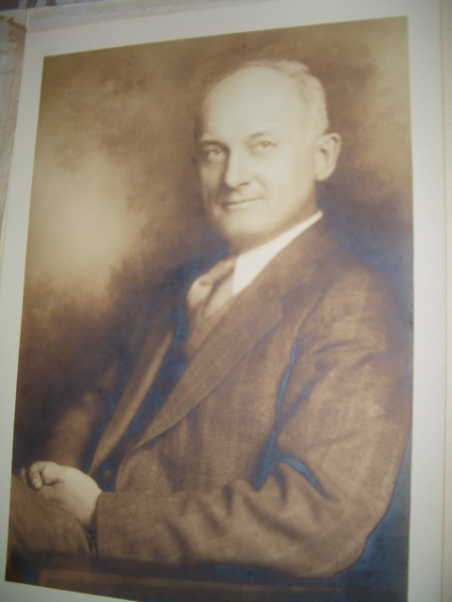
Homer L. Kitt was originally in the music business
in Chicago, before founding the Kitt’s Music Company in Washington, DC in
1922. Its successor is celebrating over
a century in continuous operation. The first store was located on 13th and G
Streets NW, just down the street from the White House (previous page, at an
unknown event in the 1930s).
The individual that prompted Kitt to move to
Washington, DC was Arthur Jordan, a successful businessman in Indianapolis in
the late 1800s, involved in the poultry, egg, and butter business, and,
according to lore, was the first man to ship a trainload of poultry from
Indianapolis to New York City. At one
point he owned scores of packing and cold storage plants in Indiana, Illinois,
Kentucky, and Ohio, before selling out in 1903. He then became involved in a number of other
manufacturing, retailing, and life insurance ventures, while also investing in
Washington, D.C., real estate, including a building on the corner of 13th
Street and G Street, home to the Juelg Piano Company.
In 1912 Juelg was on the verge of going out of business, and when
Jordan acquired it he renamed it The Jordan Piano company. In 1916 he persuaded his friend Homer L. Kitt,
who had his own music business in Chicago, to move to Washington, D.C., to
become general manager and run the retail store. Kitt was soon taken on as a partner. In addition to pianos, the store’s merchandise
included reed organs and other musical instruments as well as sheet music and
the phonograph, still in its infancy.
Jordan Piano would also ride the wave of popularity of the player
piano, which enjoyed booming sales in the 1920s and prompted the company to
open branch stores, including one in Richmond, Virginia. Jordan and Kitt also expanded their operations
to another corner of 13th and G streets. In August 1922 they acquired Knabe Warerooms,
Inc., which primarily sold Knabe pianos, a venerable German brand, as well as
other high-end instruments. Officially, the buyer of Knabe was the newly formed
Homer L. Kitt Company. Jordan’s involvement was
kept from the public, the newspaper reporting that the firm had $200,000 in
capital supplied by Kitt and his partners, prominent area businessmen C. N. Hopkins
and H. R. Appold. In addition to
carrying Knabe pianos as its main line, the Homer L. Kitt Company also
indicated that it planned to add “talking
machines” to
its inventory.

An image from Homer Kitts passport application appears at
right, when he had planned a recreational trip to Cuba in December of 1919.
For more than 60 years Jordan Piano and Homer Kitt Piano operated
independently, though covertly joint-owned. They carried different lines of instruments
and operated under separate management, and their salespeople became fierce
rivals, loathe to lose a sale to the business across the street. Both suffered through the Great
Depression of the 1930s, cutting costs and adding any products that
might bring a sale, including radios and refrigerators. In the meantime, Arthur Jordan created the
Arthur Jordan Foundation in 1928 to administer his philanthropic endeavors, and
when he passed away in 1934 his interest in both piano companies was
transferred to the charitable foundation.
 The 1930s also saw the Kitt store a victim of arson. In the early morning hours of September 14,
1938, fire trucks were called to the scene to put out a blaze that a subsequent
investigation revealed had been set separately in the basement and the first
two floors. Two earlier attempts,
according to press reports, had been made to set the building on fire. The blaze caused $50,000 in damages, including
$15,000 worth of sheet music, most of which was covered by insurance. Some of the firemen who responded to the call,
however, were injured. One man had a hand
cut by falling glass, a battalion chief was briefly overcome by gas in the
basement, and a firefighter named Buck Wright reportedly lost his false teeth.
The store reopened for business a day later and eventually its damaged Spanish
facade was replaced by an art deco design that was in vogue (right).
The 1930s also saw the Kitt store a victim of arson. In the early morning hours of September 14,
1938, fire trucks were called to the scene to put out a blaze that a subsequent
investigation revealed had been set separately in the basement and the first
two floors. Two earlier attempts,
according to press reports, had been made to set the building on fire. The blaze caused $50,000 in damages, including
$15,000 worth of sheet music, most of which was covered by insurance. Some of the firemen who responded to the call,
however, were injured. One man had a hand
cut by falling glass, a battalion chief was briefly overcome by gas in the
basement, and a firefighter named Buck Wright reportedly lost his false teeth.
The store reopened for business a day later and eventually its damaged Spanish
facade was replaced by an art deco design that was in vogue (right).
Kitt died in 1943, and the Arthur Jordan Foundation became
sole owner of the cousin piano companies, both of which barely scraped by due
to World War II, when supplies of pianos were disrupted as manufacturing
focused on the war effort. Before his
passing, Kitt had in fact done his part in the war effort, opening a Music
Canteen, as well as offering free repair services and practice space to
instrument-playing servicemen. Replacing
Kitt as general manager was his secretary, Frances Jones. Business picked up following the war as the
economy soared and returning servicemen raised families and bought homes, many
of which included a piano.

While the Jordan and Kitt stores had become the leader in
Washington, D.C., they also grew staid with time. In the 1960s when electric guitars became
highly popular with young people, Kitt’s
carried the Gibson line and Jordan’s
the Fender, but neither offered discounts and were soon overshadowed by
Washington Music Center, which sold guitars at a discount. In 1968 the two stores were finally united
when the Arthur Jordan Foundation merged the operations, creating Jordan-Kitt
Music Inc. A year later Checci
Corporation, a diversified consulting firm, bought the business.
The Arthur Jordan
Piano Company and Kitt's Music proudly serviced Washingtonians for decades,
before joining to become Jordan Kitt's Music.
Today, Jordan Kitt's operates stores in two of the country's most
vibrant top-10 markets - DC Metro and Atlanta - and is one of the oldest, most
reputable piano dealers in America. They represent only the finest brands of
acoustic, digital, hybrid and player pianos.
A privately owned and operated family business,
Jordan Kitt's Music has sold more than 250,000 pianos and teaches over 40,000
piano lessons annually. They have provided pianos, organs and technical
services to numerous venues and institutions such as The White House, The Music
Center at Strathmore, The Kennedy Center, Wolf Trap, The Atlanta Symphony
Orchestra and Spivey Hall, just to name a few.
In addition to piano sales, a significant focus of
Jordan Kitt's Music includes piano service, rentals and lessons. They also
operate one of the largest concert and artist operations in the country,
providing pianos for famous and up-and-coming artists performing at famous
venues. Now based in College Park,
Maryland, Jordan-Kitt Music Inc. is the parent company for the Jordan Kitt’s Music chain of a
dozen retail stores in Maryland, Washington, D.C., Virginia, Delaware, and
Georgia, as well as for its interest in The
Beautiful Sound music store in Chicago, Illinois. Jordan-Kitt is the largest piano and keyboard
retailer in the United States, offering a wide variety of acoustic and digital
pianos.
Most recently, Jordan Kitt's formed a partnership
with the Washington Nationals Major League Baseball Team resulting in their
acquisition of a brand new Viscount Theatre Organ for the stadium and numerous
"Pianos in the Park" events through-out the season each year. They also support Strathmore's annual student
concerts which provide over 20,000 Montgomery County School Children with an
orchestral music experience in the Music Center concert hall.
Other partnerships and events Jordan Kitt's has
been involved with include providing instruments and associated services for
the Pope's historic visit to Washington DC. Every four years they provide pianos and
services to all Inaugural Events, including the Presidential swearing-in
ceremony.


She spent her summers at the
“Gould Villa” in Newport, Rhode Island, located on Bellevue Avenue at Lake View
Street, now apparently demolished. She
first began renting prominent houses in Washington, DC in 1940, and began to
entertain her close friend, Mrs. Harry Truman.
That seems to be the impetuous to purchase a winter home in the Nation’s
Capital. A photograph of the house
appeared in the September 13, 1942 edition of the Washington Post, announcing her purchase.
On February 11, 1940, the Washington Post featured Gould in their society column coined
“Introducing.” It appears below.

Relatively little is
known about Gould or her husband, as the couple do not seem to appear in any of
the ancestry online sites, nor in any census records as a married couple, most
likely due to their extensive overseas travel.
She was mentioned in many Washington
Post articles during her tenure, seen here. She frequently had extended stays at the St.
Regis hotel in New York City.
 It resident during that time was
Charles Habib Malik (1906 – Dec 28, 1987).
He was
a Lebanese
academic, diplomat, and philosopher and also served as the Lebanese
representative to the United Nations, the President of the Commission on Human Rights and the United Nations General Assembly,
a member of the Lebanese Cabinet, a
national minister of Education and the Arts, and of Foreign Affairs and
Emigration, and theologian. He was
responsible for the drafting and adoption of the 1948 Universal Declaration of Human Rights.
It resident during that time was
Charles Habib Malik (1906 – Dec 28, 1987).
He was
a Lebanese
academic, diplomat, and philosopher and also served as the Lebanese
representative to the United Nations, the President of the Commission on Human Rights and the United Nations General Assembly,
a member of the Lebanese Cabinet, a
national minister of Education and the Arts, and of Foreign Affairs and
Emigration, and theologian. He was
responsible for the drafting and adoption of the 1948 Universal Declaration of Human Rights.
Malik, left, founded the Philosophy Department at the American University of Beirut, as well
as a cultural studies program (the 'civilization sequence program' now
'Civilization Studies Program'). He
remained in this capacity until 1945 when he was appointed to be the Lebanese Ambassador to the United
States and the United Nations.
Gould died
on May 9, 1964. The Mary Sizer Puller
Gould estate, represented by Edward Myers of the Riggs National Bank, sold the
house on July 30, 1965 to John and Trudy C. Davis.
Copyright Paul K. Williams


